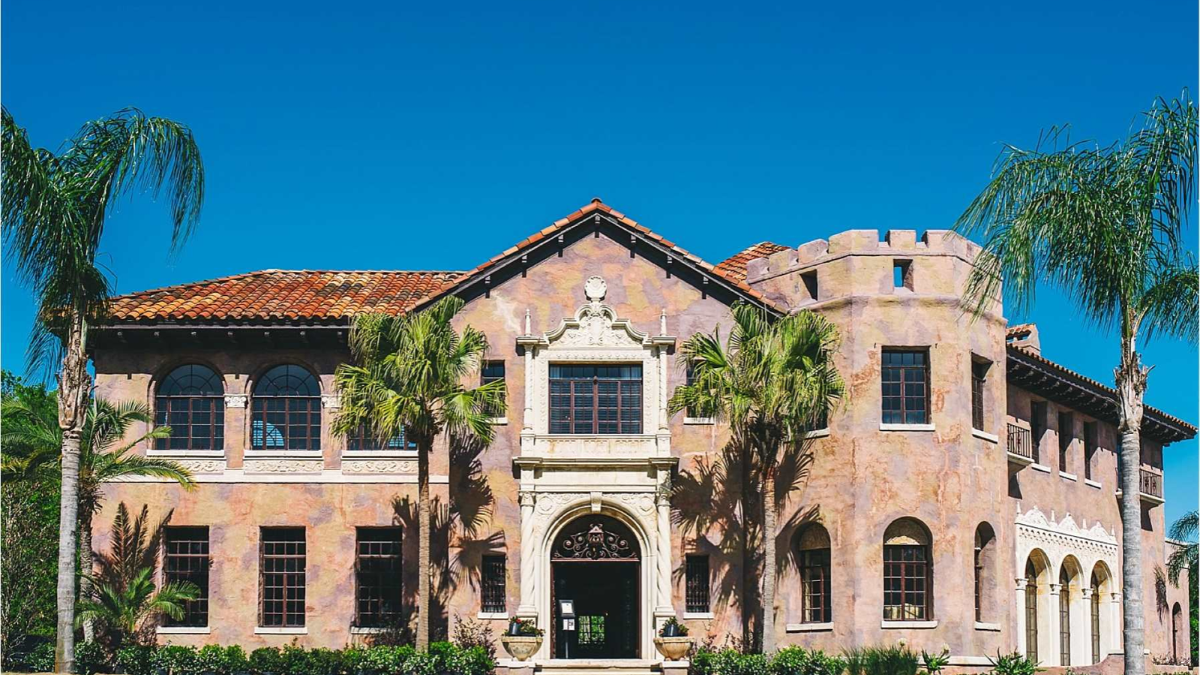
The Howey Mansion is one of the most fascinating historic landmarks in Central Florida, offering visitors a glimpse into the elegance, ambition, and architectural creativity of the 1920s. Located in Howey-in-the-Hills, Florida, this remarkable estate was built for William John Howey, a successful citrus developer and the founder of the town. With its Mediterranean Revival architecture, impressive interiors, beautiful grounds, and connections to Florida’s early development, the mansion represents an important chapter in the state’s history. Today, The Howey Mansion attracts history enthusiasts, architecture lovers, photographers, and visitors interested in exploring historic properties. Its story combines business ambition, family history, architectural achievement, and the preservation of an important piece of Florida heritage.
What Is The Howey Mansion?
The Howey Mansion is a historic residential estate situated at 1001 Citrus Avenue, Howey-in-the-Hills, Florida 34737. It was originally constructed as the private home of William J. Howey, a prominent citrus entrepreneur who played an important role in developing Central Florida. The mansion became a symbol of his business success and his vision for building a thriving community around the citrus industry. Its architectural character reflects the prosperity and luxurious lifestyle associated with Florida’s 1920s development period. The property is particularly notable for its Mediterranean Revival design, decorative interiors, and historic association with the founding of Howey-in-the-Hills. It is now a restored historic venue offering guided tours and special events.
Who Was William J. Howey?
William John Howey (1876–1938) was an American businessman, citrus developer, and community founder whose activities helped shape the development of Lake County, Florida. He became particularly successful through land development and citrus cultivation, purchasing large areas of property and promoting agricultural opportunities to prospective settlers and investors. His business ambitions extended beyond growing oranges. He wanted to establish an organized community supported by agriculture, transportation, commerce, and tourism. His vision eventually led to the creation of Howey, which later became known as Howey-in-the-Hills. The mansion was one of the most visible expressions of his success, reflecting both his personal ambitions and the economic optimism of early twentieth-century Florida.
The Early Life and Business Ambitions of William Howey
William Howey was born on January 19, 1876, and developed an interest in business and land development at an early age. Before establishing his major Lake County project, he was involved in property development around Winter Haven and other parts of Florida. His approach combined purchasing land, developing citrus groves, and marketing agricultural opportunities to potential buyers. Rather than depending entirely on speculation, Howey promoted the long-term economic possibilities of citrus cultivation. His business strategy helped attract people interested in establishing farms and investing in Florida’s growing agricultural economy. These early experiences provided the foundation for his later development project, which would become the community of Howey-in-the-Hills.
Why Did William Howey Establish Howey-in-the-Hills?
William Howey wanted to create more than a collection of citrus farms. He imagined a planned community where agriculture, business, and comfortable living could develop together. In 1916, he purchased approximately 60,000 acres of land in Lake County, Florida, for his ambitious development project. The region offered opportunities for citrus production, residential development, and commercial activity. Howey promoted the area as an attractive destination for prospective landowners and investors. His plans included supporting services, accommodation, and transportation connections that could help the community grow. The town of Howey was incorporated on May 8, 1925, and its name changed to Howey-in-the-Hills in 1927.
When Was The Howey Mansion Built?
The construction of The Howey Mansion took place during the prosperous development years of the 1920s. William Howey and his wife, Mary Hastings Howey, developed plans for their permanent residence in 1924. The mansion was completed and occupied by the end of 1925, although some historical records describe its design and construction period as extending through 1927. This difference reflects the way construction, finishing, and the mansion’s later public history are documented. The original property was described as a substantial residence with approximately 20 rooms and around 7,200 square feet. It was designed to provide an impressive home suitable for the lifestyle and social ambitions of the Howey family.
Who Designed The Howey Mansion?
The architect behind The Howey Mansion was Katharine Cotheal Budd, an architect recognized for her work during the early twentieth century. Budd was among the women who helped expand opportunities for female professionals in a traditionally male-dominated architectural field. Her design gave the estate a distinctive Mediterranean Revival appearance, combining decorative elements with the practical requirements of a large private residence. The mansion is particularly significant because it is considered a rare surviving example of her architectural work. Her involvement makes the property interesting not only from the perspective of Florida history but also from the history of American architecture and women’s professional achievements.
The Mediterranean Revival Architecture of The Howey Mansion
One of the most recognizable features of The Howey Mansion is its Mediterranean Revival architectural style. This design movement became popular in Florida during the early twentieth century, particularly among wealthy property owners who wanted homes inspired by Spanish and Italian architecture. The mansion features stucco exterior walls, red Spanish-style roof tiles, decorative openings, and architectural details that create an elegant European appearance. Its design was carefully planned to make the property visually impressive while maintaining the character of a comfortable family home. The combination of Mediterranean influences and Florida’s subtropical surroundings gives the estate a distinctive identity. It remains an interesting example of the architectural ambitions of the state’s 1920s development period.
Exterior Features and Beautiful Grounds
The exterior of The Howey Mansion creates an impressive first impression. Its historic stucco walls, red-tiled roof, decorative entrance, and surrounding landscape reflect the estate’s original grandeur. The property was designed with a spacious approach, including wrought-iron gates and a horseshoe-shaped driveway. These features helped establish a sense of privacy and elegance for the residence. Historical descriptions also mention extensive grounds known as The Park, which originally covered approximately 15 acres. The landscape provided a peaceful setting around the mansion and complemented its architectural style. Although the estate’s present event property is described as covering more than four acres, its historic grounds remain an important part of its identity.
Interior Design and Decorative Details
The interior of The Howey Mansion reflects the decorative tastes and craftsmanship associated with wealthy Florida residences of the 1920s. Its rooms were designed to accommodate family life, entertaining, and formal gatherings. Decorative plasterwork, stained glass, elaborate doorways, and traditional architectural finishes contribute to the mansion’s historic character. One particularly interesting detail is the elaborate fanlight featuring colorful stained glass and a peacock-inspired design. These elements demonstrate how architectural decoration was used to create a memorable atmosphere inside the home. Rather than being simply a large residence, the mansion was designed as a carefully coordinated architectural experience in which the interior and exterior complemented each other.
The Mansion’s Library and Hidden Prohibition-Era Features
The Howey Mansion is also associated with stories of concealed spaces and unusual architectural features. One of its most frequently discussed details is a hidden passage connected with the library and a basement space often described as a Prohibition-era vault. This feature adds an element of mystery to the property’s history and attracts visitors interested in the everyday stories behind historic houses. The Prohibition period in the United States, which lasted from 1920 to 1933, restricted the manufacture and sale of alcoholic beverages. Hidden storage spaces and concealed rooms became part of the stories surrounding some historic estates from that era. Visitors should distinguish documented architectural features from embellished stories when exploring the mansion’s history.
The Howey Mansion During Florida’s Land Boom
The construction of The Howey Mansion coincided with an important period of economic growth in Florida. During the 1920s, the Florida Land Boom attracted investors, developers, and new residents who believed the state offered enormous opportunities. Property prices and development activity increased in many communities, including areas around Lake County. William Howey benefited from the interest in citrus land and residential development. His mansion reflected the confidence and prosperity associated with that period. However, the economic environment changed dramatically when the land boom collapsed in 1926. Hurricanes, declining property values, and later national economic problems created challenges for many Florida developers, including Howey’s business interests.
The Howey Mansion as a Social and Community Landmark
The mansion was more than a private residence. It also became associated with the social ambitions of William Howey and the developing community around him. Historical accounts describe a major celebration following the completion of the residence, featuring a performance by the New York Civic Opera Company. The event reportedly attracted a large audience and demonstrated Howey’s desire to establish his community as a notable destination. Such gatherings helped connect the mansion with the wider cultural and social history of the region. Its role in community life illustrates how wealthy developers sometimes used impressive private properties to promote their towns and create a sense of local prestige.
What Happened to The Howey Mansion After William Howey’s Death?
William J. Howey died on June 7, 1938, at the age of 62. His death marked an important turning point in the history of the family estate. The mansion had been closely connected with his personal ambitions, business activities, and the development of Howey-in-the-Hills. Following his death, the property continued to exist as part of the area’s historic landscape, although it no longer represented the same period of personal influence and community development. Over the following decades, changing ownership and property conditions affected its preservation. Like many historic private residences, the mansion faced the challenge of maintaining an aging building while preserving its original architectural features.
Years of Neglect and Abandonment
One of the most difficult chapters in the history of The Howey Mansion involved a lengthy period of abandonment. The property’s current official website describes nearly ten years of complete abandonment before a new restoration chapter began. Long periods without proper maintenance can cause serious damage to historic buildings, especially in Florida, where humidity, heavy rain, and changing weather conditions can affect roofs, plaster, woodwork, and decorative surfaces. The mansion’s condition created a major challenge for anyone interested in protecting its architectural heritage. Its survival demonstrates the importance of private investment, preservation work, and community interest in saving historically significant buildings.
Restoration and Preservation of The Howey Mansion
The restoration of The Howey Mansion helped return an important historic property to public attention. After its period of abandonment, the estate entered a new chapter under restoration efforts associated with private owners. The goal was to preserve its historic character while making the building suitable for modern uses, including tours and special events. Restoration of a property like this requires careful attention to architectural materials, decorative finishes, and the features that make the building historically distinctive. The work also helps visitors understand the importance of protecting historic structures. Today, the restored mansion serves as a reminder that neglected properties can regain cultural and community value through thoughtful preservation.
Is The Howey Mansion a Historic Landmark?
Yes. The Howey Mansion has an important place in Florida’s architectural and historical record. According to the State Archives of Florida, the property was added to the National Register of Historic Places on January 27, 1983. This recognition reflects its architectural significance and association with William John Howey, an important figure in the development of Central Florida. The National Register listing helps document properties that have historical, architectural, or cultural importance. It also makes the mansion a valuable subject for researchers, preservation enthusiasts, and visitors interested in Florida’s past. Its significance extends beyond its attractive appearance because it represents a specific period of the state’s economic and architectural development.
Visiting The Howey Mansion Today
Visitors interested in exploring The Howey Mansion can find it at 1001 Citrus Avenue, Howey-in-the-Hills, Florida. The property’s official website advertises guided historic tours that introduce visitors to the mansion’s rooms, architecture, and local history. The venue also hosts weddings and other private events. According to its visitor information, access is by appointment rather than ordinary walk-in opening hours. Anyone planning a visit should check the official website for available tour dates, ticket arrangements, and current visitor requirements. This is especially important because historic properties may have limited access depending on private events, maintenance work, and scheduled activities.
Weddings, Photography, and Special Events
The Howey Mansion has developed a modern identity as a historic wedding and event venue. Its architectural details, landscaped surroundings, and distinctive interiors create an attractive setting for celebrations and photography. The official venue website promotes weddings ranging from intimate gatherings to larger events, as well as customized functions in areas such as the ballroom and fountain courtyard. These modern uses help support the property’s continued operation and preservation. They also introduce the mansion to people who might not otherwise visit a historic building. However, event availability, guest capacity, photography policies, and booking arrangements should always be confirmed directly with the venue before making plans.
Why The Howey Mansion Is Important to Florida History
The historical importance of The Howey Mansion comes from the combination of its architecture, its connection with William J. Howey, and its place in the development of Central Florida. It provides a physical reminder of the citrus industry, land development, and economic optimism that helped shape the region during the early twentieth century. The mansion also preserves the legacy of architect Katharine Cotheal Budd, whose work deserves recognition in the history of American architecture. Its survival and restoration demonstrate the value of protecting historic properties for future generations. For researchers and visitors, the estate offers a way to connect local history with broader developments in American society.
The Lasting Legacy of The Howey Mansion
More than a century after its construction began, The Howey Mansion continues to attract attention because its story combines architecture, entrepreneurship, community development, and preservation. William Howey’s vision helped establish a town, while the mansion became one of the most recognizable physical reminders of his ambitions. Its Mediterranean Revival design gives it architectural distinction, and its restoration has allowed new generations to experience the property. Although the economic circumstances that originally shaped the estate have changed, its historical significance remains. The mansion is not simply an impressive old building; it is a surviving piece of Florida’s development story and a reminder of the people who helped shape the state.
Conclusion
The Howey Mansion stands as an important historic property in Howey-in-the-Hills, Florida. Built for citrus entrepreneur and town founder William J. Howey, the estate reflects the ambition, prosperity, and architectural creativity of the 1920s. Its Mediterranean Revival design, distinctive interior details, connection with architect Katharine Cotheal Budd, and association with Florida’s citrus industry make it an especially interesting landmark. After experiencing years of abandonment, the mansion entered a restoration chapter that helped bring it back into public view. Today, guided tours, weddings, and special events provide new opportunities to appreciate the property. The Howey Mansion remains a valuable reminder of Florida’s history and the importance of preserving historic architecture.
Frequently Asked Questions
Where is The Howey Mansion located?
The Howey Mansion is located at 1001 Citrus Avenue, Howey-in-the-Hills, Florida 34737, in Lake County. It is a historic estate associated with the town’s founder, William J. Howey.
Who built The Howey Mansion?
The mansion was built for William John Howey, a prominent citrus developer and founder of Howey-in-the-Hills. He and his wife, Mary Hastings Howey, planned the residence during the 1920s.
When was The Howey Mansion constructed?
The mansion was completed and occupied by the end of 1925, although some historical records describe its construction and design period as extending from 1925 to 1927.
Who was the architect of The Howey Mansion?
The mansion was designed by Katharine Cotheal Budd, an architect whose work makes the property especially interesting in the history of early twentieth-century American architecture.
Can visitors tour The Howey Mansion?
Yes. The official venue website advertises guided historic tours. Visitors should check current dates, ticket availability, and appointment requirements before visiting.
Is The Howey Mansion listed on the National Register of Historic Places?
Yes. The property was listed on the National Register of Historic Places on January 27, 1983, according to the State Archives of Florida.
Can The Howey Mansion be used for weddings and private events?
Yes. The estate operates as a wedding and event venue. Interested visitors can contact the official venue directly for current packages, availability, and booking information.