
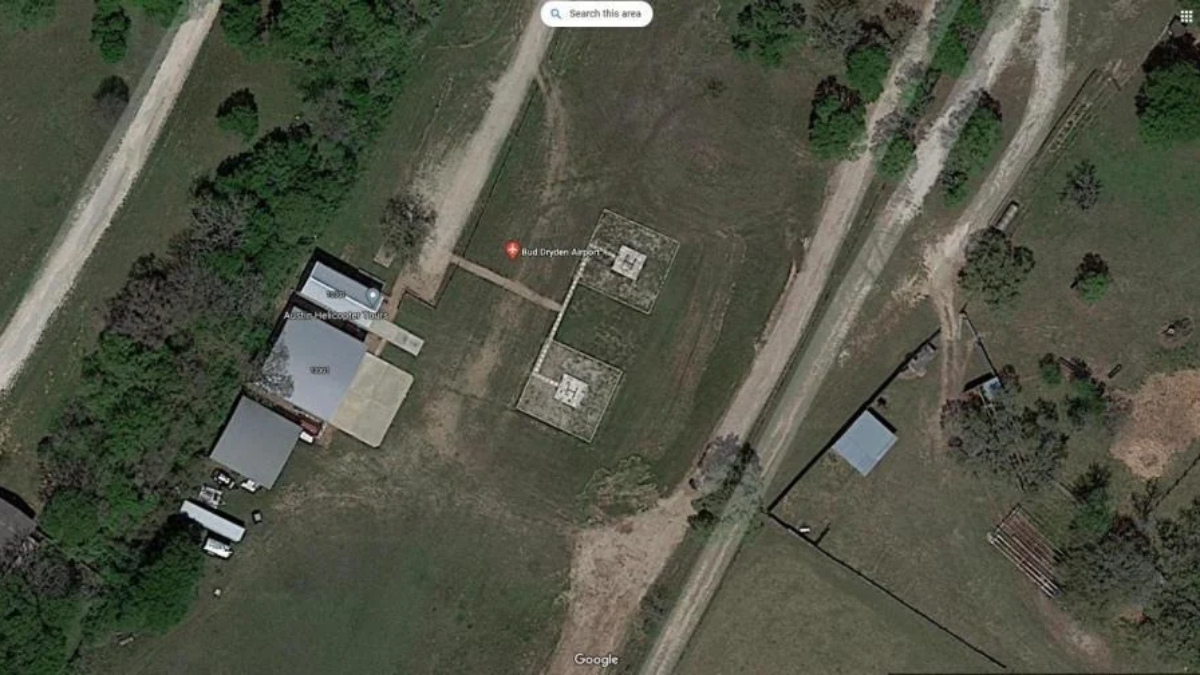
Bud Dryden Airport is a small private aviation facility located near Austin, Texas, in the United States. Unlike major commercial airports that serve thousands of passengers, this airfield is designed for a more limited type of aviation activity. It has a single grass runway, no on-site air traffic control tower, and restricted access for aircraft operations.
Identified by the FAA code TX05, Bud Dryden Airport is an interesting example of the smaller private airfields that form part of America’s general aviation network. Its location approximately six nautical miles southeast of Austin places it within a region that also contains major commercial and general aviation airports.
For people researching Texas airports, private aviation, or smaller airfields around Austin, understanding this airport requires looking beyond its name. Its runway dimensions, ownership, operating restrictions, surrounding airspace, and nearby aviation facilities all help explain its purpose.
This guide explores the available information about Bud Dryden Airport, including its location, runway specifications, facilities, operating environment, and relationship with other airports in the Austin region.
What Is Bud Dryden Airport?
Bud Dryden Airport is a privately owned airport in Austin, Texas. It is identified by the Federal Aviation Administration (FAA) with the location identifier TX05.
The airport is classified as a private-use general aviation facility rather than a commercial passenger airport. This means it is not designed to provide scheduled airline services or the passenger facilities commonly found at major transportation hubs.
One of its most recognizable characteristics is its grass runway. While large airports generally use paved surfaces, smaller airfields sometimes use turf runways for suitable aircraft operations.
According to available FAA-derived airport records, Bud Dryden Airport has one runway measuring approximately 2,300 feet long and 60 feet wide. The airport is privately owned and does not have an on-site control tower. Bud Dryden Airport+1
Its private-use designation is particularly important. Pilots cannot assume that the airport is available for public landings. Permission must be obtained before using the facility.
Where Is Bud Dryden Airport Located?
Bud Dryden Airport is located in Travis County, near Austin, Texas, United States. Airport records place it approximately six nautical miles southeast of Austin.
Its geographic position makes it part of the wider aviation environment surrounding the Texas capital.
The approximate airport coordinates are:
- Latitude: 30.260486° N
- Longitude: 97.625278° W
- Elevation: Approximately 500 feet above mean sea level
- FAA identifier: TX05
- County: Travis County
- State: Texas
These coordinates can help aviation enthusiasts and researchers identify the airport on mapping applications and aviation charts. Bud Dryden Airport+1
The surrounding region includes residential areas, transportation infrastructure, and other aviation facilities. Its proximity to Austin-Bergstrom International Airport also makes the local airspace an important consideration for pilots.
However, being relatively close to a large city does not make Bud Dryden Airport a public transportation facility. Its private-use classification remains an essential part of understanding its operations.
Bud Dryden Airport at a Glance
The following table provides an overview of the airport’s principal recorded characteristics.
| Airport Detail | Information |
|---|---|
| Airport name | Bud Dryden Airport |
| FAA identifier | TX05 |
| City | Austin |
| County | Travis County |
| State | Texas |
| Country | United States |
| Ownership | Private |
| Airport use | Private use |
| Elevation | Approximately 500 feet |
| Number of runways | One |
| Runway designation | 01/19 |
| Runway length | 2,300 feet |
| Runway width | 60 feet |
| Runway surface | Turf |
| Control tower | No |
| Activation date | November 2000 |
These specifications are based on available FAA-derived airport information. Operational details can change, so pilots should verify current official records before planning a flight. Bud Dryden Airport+1
Runway Information and Specifications
The runway is one of the most important features of Bud Dryden Airport.
Unlike larger airports with multiple paved runways, this facility has a single turf runway. Its dimensions and surface make it different from the infrastructure used by commercial passenger aircraft.
Runway 01/19
Bud Dryden Airport has one runway designated 01/19.
Its recorded dimensions are approximately 2,300 feet in length and 60 feet in width. In metric measurements, this is approximately 701 meters long and 18 meters wide.
The runway has a grass or turf surface, which requires different operating considerations from asphalt and concrete.
Some important specifications include:
- Runway designation: 01/19
- Length: 2,300 feet
- Width: 60 feet
- Surface: Turf
- Displaced threshold: 200 feet at the Runway 19 end
- Traffic pattern: Left traffic for both directions
The airport records also identify trees as an obstacle near the Runway 19 end. Pilots should consult current airport information for the exact operational significance of these details. Bud Dryden Airport+1
What Does Runway 01/19 Mean?
Airport runway numbers are based on their magnetic direction, rounded to the nearest ten degrees.
Runway 01 generally represents a direction close to 010 degrees, while Runway 19 represents approximately 190 degrees.
These numbers describe opposite directions along the same runway. They help pilots identify runway orientation during airport operations.
Why Does a Grass Runway Matter?
A grass runway differs from a paved runway in several important ways.
Its condition can change with rainfall, soil moisture, seasonal weather, and maintenance. Wet or soft turf can affect aircraft acceleration, braking, and ground handling.
Grass surfaces may be suitable for certain aircraft, but suitability depends on aircraft performance and the runway’s actual condition.
Pilots should never assume that an aircraft can safely operate from a turf runway simply because its dimensions appear sufficient.
Is Bud Dryden Airport Public or Private?
Bud Dryden Airport is classified as a private-use airport.
This means that it is not generally available for unrestricted public aircraft operations. Pilots must obtain permission before landing.
The distinction between private-use and public-use airports is important because airport listings can sometimes create confusion.
An airport may appear in aviation databases, mapping applications, and flight-planning resources without being open to everyone.
Private airports can have access arrangements established by their owners or managers. These arrangements may depend on the aircraft, purpose of the visit, and other operational considerations.
For anyone interested in using Bud Dryden Airport, the appropriate approach is to contact the responsible airport representative and confirm permission in advance.
The airport’s listing in an aviation directory should not be interpreted as authorization to land or enter the property. Bud Dryden Airport+1
Who Owns and Manages Bud Dryden Airport?
Available FAA-derived airport records identify Buddy Dryden as the owner and manager of Bud Dryden Airport.
The ownership information lists the facility as privately owned and provides a contact address in Austin, Texas.
This information helps distinguish the airport from municipal airports and major transportation facilities managed by public authorities.
Private ownership generally means that the owner or authorized management is responsible for airport access arrangements and applicable property decisions.
It is important to distinguish verified ownership information from personal history. Public airport records identify the owner, but they do not provide enough information to establish a detailed biography or explain the complete history of the property’s development. Bud Dryden Airport+1
What Facilities and Services Are Available?
Bud Dryden Airport has a much smaller infrastructure profile than commercial airports.
Its available directory information identifies a runway and basic operational details, but it does not establish a comprehensive list of public passenger or commercial aviation services.
Visitors should not expect the facilities normally associated with major airports.
For example, the airport is not listed as having:
- Commercial airline ticket counters
- Public passenger departure lounges
- Baggage handling terminals
- Airline boarding gates
- Airport shopping areas
- Public restaurants
- Scheduled passenger transportation
Similarly, the available listing does not confirm publicly accessible aircraft fuel, maintenance, or rental services.
This distinction matters because airport directories may contain information about an airport’s runway and ownership without confirming the availability of additional services.
Anyone requiring fuel, aircraft storage, maintenance, or other assistance should confirm availability directly before making arrangements.
Does Bud Dryden Airport Have an Air Traffic Control Tower?
Bud Dryden Airport is listed without an on-site air traffic control tower.
An airport control tower normally provides air traffic control services for aircraft operating within its designated control environment. At airports without a tower, pilots must follow the applicable procedures for the surrounding airspace and airport operations.
However, the absence of a tower does not mean aircraft can operate without communication or regulatory requirements.
Interestingly, airport records include a remark directing pilots to contact Austin Approach for clearance coordination. They also identify Houston Center as the responsible Air Route Traffic Control Center. Bud Dryden Airport+1
Understanding the Difference Between a Tower and an Approach Facility
An airport control tower and an approach control facility perform different functions.
An airport tower manages aircraft movements within its designated airport control area, including applicable runway and traffic operations.
Approach control provides air traffic services for arriving and departing aircraft within designated airspace.
Consequently, a facility without its own tower can still operate within an airspace environment involving other air traffic control facilities.
Pilots must follow current FAA procedures, airport-specific requirements, and applicable airspace restrictions.
Airspace and Aviation Communication Around the Airport
Bud Dryden Airport is situated in an active aviation region surrounding Austin. Several airports operate in the wider area, including Austin-Bergstrom International Airport and Austin Executive Airport.
Because of this environment, understanding airspace requirements is important for anyone researching or planning operations at TX05.
The available airport information identifies:
- ARTCC: Houston Center
- Flight Service Station: San Angelo
- Nearby navigation aid: CENTEX VORTAC
- Nearby weather reporting: Austin-Bergstrom and Austin Executive
The airport listing also contains a remark about coordination with Austin Approach. This indicates that pilots must pay attention to the applicable local airspace arrangements rather than treating the facility as an isolated private airfield. Bud Dryden Airport+1
Why Airspace Awareness Matters
Airspace awareness is an essential part of aviation safety.
Pilots operating around a major metropolitan area must understand controlled airspace, communication requirements, traffic patterns, and applicable flight restrictions.
The presence of a private airport does not automatically provide unrestricted access to surrounding airspace.
Current aeronautical charts, FAA publications, NOTAMs, and appropriate flight briefings should be consulted before any operation.
Weather Conditions Around Bud Dryden Airport
Weather is an important consideration for every airport, but it can be particularly relevant at facilities with unpaved runways.
Austin and the surrounding Central Texas region generally experience hot summers, relatively mild winters, and changing seasonal weather.
For Bud Dryden Airport, weather can affect both aircraft performance and turf runway conditions.
Rainfall and Runway Conditions
Rainfall can influence the condition of a grass runway.
Heavy rain may soften the surface, increase moisture in the soil, and affect aircraft movement. A runway that is suitable in dry weather may have different operating characteristics after significant rainfall.
Pilots should verify current surface conditions rather than relying on historical runway specifications.
Temperature and Aircraft Performance
High temperatures can influence aircraft performance because warmer air is less dense.
This can affect engine performance, lift, and takeoff requirements. Aircraft operating from shorter runways must consider these factors carefully.
Wind and Visibility
Wind direction and speed are important when selecting a runway and planning aircraft operations.
Visibility, cloud ceilings, thunderstorms, and sudden weather changes are also relevant.
Nearby weather reporting facilities can provide useful information, but observations from another airport should not automatically be treated as identical to conditions at Bud Dryden Airport.
History of Bud Dryden Airport
Bud Dryden Airport has an activation date of November 2000 in the available airport records.
This date provides a documented reference point for its listing in aviation records. However, it should not automatically be interpreted as the exact date of the property’s purchase, runway construction, or first aircraft operation.
The publicly available information provides more detail about the airport’s current classification and physical characteristics than its historical development.
There is insufficient verified information to establish a detailed timeline of construction, ownership changes, or major historical events associated with the airport.
For researchers interested in its development, historical FAA airport records, aeronautical charts, and relevant property records may provide additional information. Bud Dryden Airport+1
Why Are Small Private Airports Important?
Small private airports are part of the broader general aviation system in the United States.
Although they do not handle the passenger volumes of major commercial airports, they can provide important facilities for authorized aircraft operators.
Their roles may include supporting private flying, local aviation activities, and other specialized operations.
The importance of an airport should not be measured only by passenger numbers. A small airfield can serve a different purpose from a major commercial transportation hub.
Bud Dryden Airport represents this smaller category of aviation infrastructure in the Austin region.
Nearby Airports Around Bud Dryden Airport
Austin has several airports serving different aviation needs. Bud Dryden Airport is located within a region that includes commercial passenger facilities and general aviation airports.
Some nearby facilities identified in airport directories include the following:
| Nearby Airport | FAA Identifier | Approximate Distance |
|---|---|---|
| Austin-Bergstrom International Airport | KAUS | 4.6 nautical miles |
| Austin Executive Airport | KEDC | 8.8 nautical miles |
| Lakeway Airpark | 3R9 | 20 nautical miles |
| Taylor Municipal Airport | T74 | 21 nautical miles |
| Lago Vista/Rusty Allen Airport | KRYW | 23 nautical miles |
Distances are approximate aviation-directory figures and may vary by measurement method. SkyVector+1
Austin-Bergstrom International Airport
Austin-Bergstrom International Airport is the main commercial airport serving Austin.
It provides scheduled passenger airline services and facilities for travelers visiting or leaving the region.
Unlike Bud Dryden Airport, it has paved runways, passenger terminals, and extensive airport infrastructure.
It is the more relevant facility for people searching for commercial flights to Austin.
Austin Executive Airport
Austin Executive Airport is another important aviation facility in the region.
It serves general aviation and business aviation activities and offers a different operating environment from Bud Dryden Airport.
Its presence contributes to the variety of aviation facilities available around Austin.
Lakeway Airpark
Lakeway Airpark is another smaller airport in the wider Austin area.
It is relevant to people researching general aviation facilities and private airfields across Central Texas.
Bud Dryden Airport vs. Austin-Bergstrom International Airport
Although both airports are associated with Austin, their purposes and infrastructure are very different.
| Feature | Bud Dryden Airport | Austin-Bergstrom |
|---|---|---|
| FAA identifier | TX05 | KAUS |
| Ownership | Private | Public airport |
| Main purpose | Private-use aviation | Commercial and general aviation |
| Runway surface | Turf | Paved |
| Passenger airline service | Not listed | Available |
| Control tower | No | Yes |
| Public passenger terminal | Not listed | Available |
| Public landing access | Restricted | Subject to airport operating rules |
The comparison shows why Bud Dryden Airport should not be confused with Austin’s main commercial airport.
Someone searching for passenger flights, airline schedules, or airport transportation should look at Austin-Bergstrom instead.
Is Bud Dryden Airport Open to Visitors?
Bud Dryden Airport is listed as a private-use airport, which means it is not generally open for unrestricted public aircraft operations.
People interested in visiting the property should confirm the owner’s access arrangements before making plans.
It is important to distinguish between viewing an airport’s location online and physically entering private property.
Similarly, pilots must obtain permission before landing.
The safest approach is to verify access directly with the responsible airport representative rather than assuming that an online airport listing grants permission.
Can Commercial Airlines Fly to Bud Dryden Airport?
Bud Dryden Airport is not listed as an airport providing scheduled commercial passenger airline services.
Its private-use designation and single turf runway distinguish it from airports designed for commercial passenger operations.
Commercial aviation generally requires appropriate runway infrastructure, operational facilities, passenger handling arrangements, and other requirements.
Bud Dryden Airport should therefore not be considered an alternative passenger terminal for Austin-Bergstrom International Airport.
Travelers planning commercial flights to Austin should use the scheduled airline services available through the region’s commercial airport.
Important Things Pilots Should Know Before Using TX05
Pilots researching Bud Dryden Airport should consider several factors before planning any operation.
The airport’s runway length alone does not establish whether it is suitable for a particular aircraft.
Aircraft performance, surface conditions, weather, surrounding obstacles, and access permission all matter.
Before considering an operation, pilots should:
- Obtain explicit permission to use the airport.
- Review current FAA airport information.
- Check applicable NOTAMs.
- Verify runway conditions.
- Evaluate aircraft performance on turf.
- Review surrounding controlled airspace.
- Confirm applicable communication procedures.
- Obtain an appropriate weather briefing.
- Review current airport remarks and operating restrictions.
The runway has recorded dimensions of 2,300 by 60 feet, but those figures should not be used as a substitute for aircraft-specific performance calculations.
A short runway and grass surface require careful consideration, particularly when weather conditions change.
Why Is Bud Dryden Airport Interesting to Aviation Enthusiasts?
Bud Dryden Airport is interesting because it represents a less familiar part of the aviation industry.
Most people associate airports with large passenger terminals, commercial aircraft, airline companies, and extensive runways.
However, the aviation network also includes private airfields with smaller facilities and more limited access.
Several characteristics make Bud Dryden Airport worth researching:
- Its private ownership.
- Its location near Austin, Texas.
- Its FAA identifier TX05.
- Its single grass runway.
- Its lack of an on-site control tower.
- Its position within a wider regional aviation network.
These characteristics make the airport a useful example when studying the differences between private aviation facilities and commercial airports.
Future of Small Private Airports in Texas
Texas has a large and diverse aviation environment, including international airports, regional airports, municipal facilities, and privately owned airfields.
Each type of airport serves a different purpose.
Small private airports can remain important because they provide facilities for authorized general aviation activities without requiring the extensive infrastructure of commercial passenger airports.
However, private airfields may also face challenges involving property development, maintenance costs, changing local regulations, and surrounding land use.
For Bud Dryden Airport, there is not enough verified public information to establish a specific expansion plan or predict future operational changes.
Anyone following its development should consult updated FAA records and information from the airport’s management.
Conclusion
Bud Dryden Airport is a privately owned aviation facility located near Austin, Texas. Identified by the FAA code TX05, it has one turf runway measuring approximately 2,300 feet long and 60 feet wide.
Its private-use classification, lack of an on-site control tower, and relatively small runway distinguish it from major commercial airports.
Although it is located within the wider Austin aviation environment, it is not a scheduled passenger airport and should not be treated as a public landing facility.
For aviation enthusiasts and researchers, Bud Dryden Airport offers an interesting example of a small private airfield and its place within the general aviation network.
The most important point is simple: Bud Dryden Airport is a private-use aviation facility, and permission is required before landing. Anyone researching or considering its use should verify current airport information and applicable operating requirements.
Frequently Asked Questions About Bud Dryden Airport
Where is Bud Dryden Airport located?
Bud Dryden Airport is located in Travis County, near Austin, Texas, United States. It is approximately six nautical miles southeast of Austin.
What is the FAA identifier for Bud Dryden Airport?
The airport’s FAA identifier is TX05. This code helps identify the facility in aviation databases, airport directories, and related flight-planning resources.
Is Bud Dryden Airport privately owned?
Yes. Available FAA-derived airport records identify the facility as privately owned, with Buddy Dryden listed as its owner and manager.
How long is the runway at Bud Dryden Airport?
The airport has one runway measuring approximately 2,300 feet long and 60 feet wide. Its surface is listed as turf or grass.
Is Bud Dryden Airport open to the public?
No. It is classified as a private-use airport. Pilots must obtain permission before landing, and visitors should confirm access arrangements before entering the property.
Does Bud Dryden Airport have a control tower?
No. Available airport records indicate that it does not have an on-site air traffic control tower. However, pilots must still follow applicable airspace and communication requirements.
Is Bud Dryden Airport used by commercial airlines?
No scheduled commercial passenger airline service is listed for Bud Dryden Airport. It is a private-use aviation facility rather than a commercial passenger airport.





[…] Strengthen Lengthen Tone describes three important fitness goals: developing muscular strength, improving flexibility and movement, and supporting muscular definition. […]