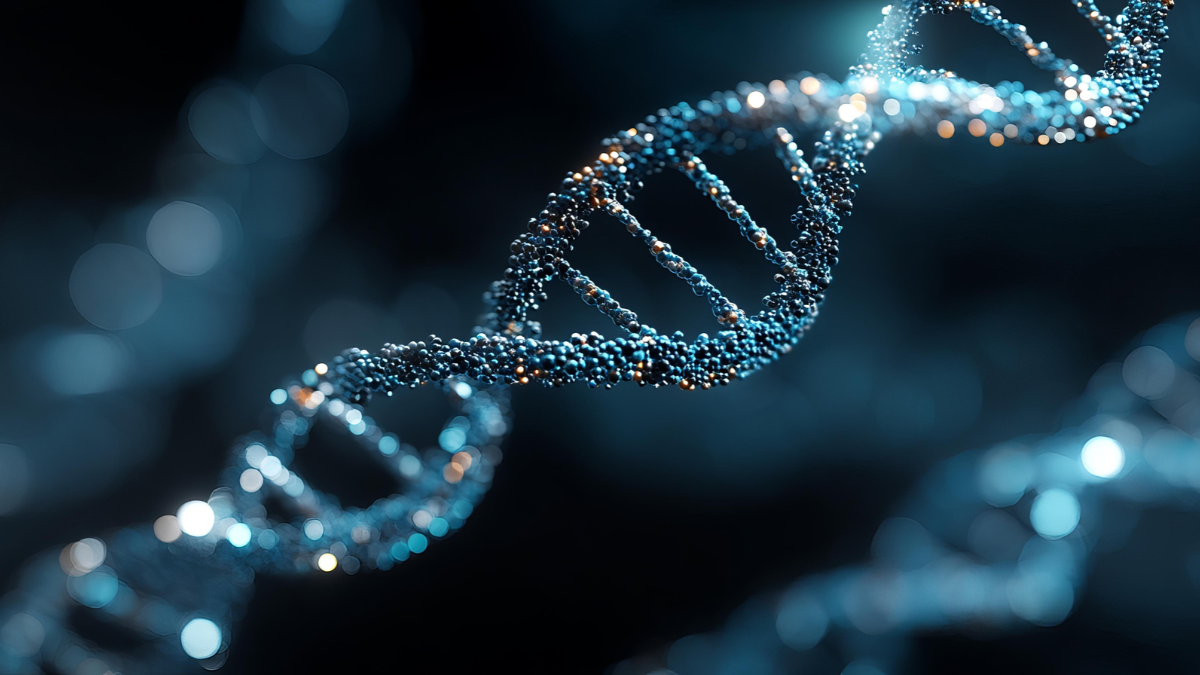
DNA is one of the most important molecules in every living organism. It carries the biological instructions that help organisms grow, develop, function, and reproduce. From determining inherited characteristics such as eye color to controlling how cells produce essential proteins, DNA plays a central role in life.
But what is DNA, how does it work, and why is it so important? DNA stands for Deoxyribonucleic Acid. It is the hereditary material found in humans and almost all other living organisms. It contains genetic information that passes from parents to their children and influences many characteristics of an organism.
Understanding DNA helps explain genetics, inherited diseases, biological development, medical research, ancestry testing, and modern biotechnology. This guide explores what DNA is, how it is structured, how it works, where it is found, and why scientists consider it essential to understanding life.
What Is DNA?
DNA (Deoxyribonucleic Acid) is a molecule that stores and carries the genetic instructions required for the development, survival, and reproduction of living organisms.
Think of DNA as a biological instruction manual. Just as a computer uses coded information to perform different operations, living cells use the information stored in DNA to carry out essential biological activities.
In humans, DNA contains instructions that influence physical characteristics, cellular functions, and many biological processes. These instructions are organized into smaller sections called genes.
DNA is made from chemical building blocks known as nucleotides. These building blocks connect in a specific order to form long strands of genetic information.
Almost every cell in the human body contains a complete copy of the person’s DNA. Although different cells perform different jobs, they generally contain the same genetic instructions.
What Does DNA Stand For?
DNA stands for Deoxyribonucleic Acid. The name describes the chemical nature of this important biological molecule.
The term can be understood in three parts:
- Deoxy: Refers to the sugar molecule in DNA, which contains one less oxygen atom than ribose.
- Ribo: Refers to the sugar component related to ribose.
- Nucleic Acid: Describes the type of biological molecule made from chains of nucleotides.
DNA is called a nucleic acid because it belongs to a group of molecules responsible for storing, transmitting, and using genetic information.
Its chemical structure allows genetic instructions to remain organized and be copied when cells divide. This makes DNA essential for maintaining life and passing hereditary information between generations.
Who Discovered DNA?
The discovery of DNA developed through several scientific contributions rather than a single event.
In 1869, Swiss scientist Friedrich Miescher first isolated a substance from the nuclei of white blood cells. He called it nuclein. Scientists later identified this substance as DNA.
During the following decades, researchers investigated its chemical composition and biological role.
An important breakthrough came in 1952, when research by Rosalind Franklin and Raymond Gosling provided crucial X-ray diffraction evidence about DNA’s helical structure.
In 1953, James Watson and Francis Crick proposed the famous double-helix model of DNA. Their model explained how two complementary strands could fit together and how genetic information could be copied.
Rosalind Franklin’s experimental work was particularly important to understanding this structure. Maurice Wilkins also contributed to the research.
The discovery of DNA’s double-helix structure transformed modern biology and opened new opportunities in genetics, medicine, and biotechnology.
What Is the Structure of DNA?
DNA has a distinctive structure commonly described as a double helix. It looks similar to a twisted ladder, with two long strands winding around each other.
Each strand contains a sequence of chemical building blocks called nucleotides.
The structure has two main components:
- Sugar-phosphate backbone: Forms the outer sides of the DNA molecule.
- Nitrogenous bases: Form the internal connections between the two strands.
The two strands are held together through interactions between complementary nitrogenous bases.
The double-helix structure is important because it allows DNA to store genetic information while providing a reliable mechanism for copying that information.
Each strand can serve as a template for producing a complementary strand during DNA replication.
What Are the Four Bases of DNA?
DNA contains four nitrogenous bases that form the genetic code.
These bases are:
- Adenine (A)
- Thymine (T)
- Guanine (G)
- Cytosine (C)
The bases pair according to specific rules:
- Adenine pairs with Thymine.
- Guanine pairs with Cytosine.
These relationships are known as complementary base pairing.
The order of these four bases carries genetic information. Even small changes in their sequence can sometimes influence how a gene works.
DNA Base Pairing Explained
| DNA base | Complementary base |
|---|---|
| Adenine (A) | Thymine (T) |
| Thymine (T) | Adenine (A) |
| Guanine (G) | Cytosine (C) |
| Cytosine (C) | Guanine (G) |
For example, if one DNA strand contains the sequence A-T-G-C, its complementary strand will contain T-A-C-G.
This pairing system helps DNA maintain its structure and accurately reproduce genetic information.
Where Is DNA Found in the Human Body?
DNA is present in almost every cell of the human body. Most human DNA is located inside the cell nucleus, which acts as the control center of the cell.
DNA is also found in mitochondria, which are small structures responsible for producing usable energy for cells.
There are two main locations where human DNA is found.
Nuclear DNA
Nuclear DNA is the genetic material stored inside the nucleus of a cell. It makes up the majority of a person’s genetic information.
Human nuclear DNA is organized into 23 pairs of chromosomes, giving most body cells a total of 46 chromosomes.
One chromosome in each pair generally comes from the biological mother, while the other comes from the biological father.
Mitochondrial DNA
Mitochondrial DNA, also called mtDNA, is found inside mitochondria rather than the cell nucleus.
Unlike nuclear DNA, mitochondrial DNA is generally inherited from the biological mother.
Human mitochondrial DNA contains approximately 16,500 base pairs and 37 genes. These genes help mitochondria perform important functions related to energy production.
| Feature | Nuclear DNA | Mitochondrial DNA |
|---|---|---|
| Location | Cell nucleus | Mitochondria |
| Structure | Organized into chromosomes | Small circular DNA molecule |
| Amount | Majority of cellular DNA | Small portion of cellular DNA |
| Inheritance | From both biological parents | Generally from the mother |
| Main role | Stores most genetic instructions | Supports mitochondrial functions |
What Are Genes and Chromosomes?
Genes and chromosomes are two important parts of the genetic system. They work together to organize and use the information stored in DNA.
Although these terms are closely related, they do not mean the same thing.
What Are Genes?
A gene is a section of DNA that contains instructions for producing a functional product, such as a protein or functional RNA molecule.
Genes influence many biological characteristics and processes, including:
- Production of proteins.
- Growth and development.
- Cellular activities.
- Biological functions.
- Inherited characteristics.
For example, certain genes influence pigmentation, which contributes to differences in eye, hair, and skin color.
However, most human characteristics are influenced by multiple genes and environmental factors rather than a single gene.
What Are Chromosomes?
Chromosomes are organized structures made from DNA and proteins. They help package long DNA molecules so they can fit inside cells.
Humans typically have 46 chromosomes arranged into 23 pairs in most body cells.
The 23rd pair is commonly called the sex chromosome pair. Many females have XX chromosomes, while many males have XY chromosomes, although variations in sex chromosome patterns also occur.
Genes are located along chromosomes. Each chromosome contains many genes as well as DNA sequences that do not directly encode proteins.
What Does DNA Do in the Human Body?
DNA performs several essential functions that allow the human body to grow, develop, and maintain normal biological activities.
Without DNA, cells would not have the genetic instructions needed to produce the molecules and structures required for life.
Stores Genetic Information
One of DNA’s primary functions is storing hereditary information.
The sequence of its four chemical bases creates instructions that cells use to produce proteins and other functional molecules.
This information is passed from one generation to the next through reproduction.
Controls Protein Production
DNA contains instructions used by cells to make proteins.
Proteins perform a wide range of functions, including supporting tissues, transporting substances, controlling chemical reactions, and helping the immune system work.
DNA does not directly manufacture proteins. Instead, cells use RNA molecules to transfer and interpret genetic instructions.
Supports Growth and Development
DNA provides instructions that guide the development of an organism.
During human development, cells divide and become specialized for different purposes. For example, some cells develop into muscle cells, while others become nerve cells or blood cells.
Although these cells generally contain the same DNA, different genes are activated or silenced depending on their functions.
Passes Characteristics Between Generations
DNA carries inherited information from biological parents to their children.
Some characteristics, such as certain blood group patterns, are strongly influenced by inherited genes. Other characteristics, including height and many aspects of appearance, involve multiple genetic and environmental influences.
Helps Maintain and Repair Cells
DNA contains instructions that help cells produce proteins involved in maintaining and repairing cellular structures.
Cells also have DNA repair systems that identify and correct many forms of genetic damage.
These systems help preserve the stability of genetic information.
How Does DNA Work?
DNA works by storing genetic instructions and allowing cells to access those instructions when needed.
The process involves several important biological activities, including DNA replication, transcription, and translation.
These processes are closely connected and help cells maintain genetic information and produce proteins.
DNA Replication
DNA replication is the process through which a DNA molecule makes a copy of itself.
This process is especially important before a cell divides because each new cell generally needs a complete set of genetic instructions.
During replication:
- The DNA double helix unwinds.
- The two strands separate.
- Each original strand acts as a template.
- New complementary bases are added.
- Two DNA molecules are produced.
Each resulting DNA molecule contains one original strand and one newly synthesized strand. This process is called semiconservative replication.
DNA Transcription
Transcription is the process of copying genetic information from DNA into RNA.
An enzyme called RNA polymerase reads a particular DNA sequence and produces an RNA molecule.
For protein-coding genes, this RNA is processed into messenger RNA (mRNA), which carries the instructions needed for protein production.
DNA Translation
Translation is the process through which ribosomes read the information in messenger RNA and assemble amino acids into proteins.
Transfer RNA molecules help bring the correct amino acids to the ribosome.
The amino acids are connected in a particular sequence to produce a protein.
Together, transcription and translation are often described as the central flow of genetic information: DNA to RNA to protein.
What Is the Difference Between DNA and RNA?
DNA and RNA are both nucleic acids, but they have different structures and functions.
DNA primarily stores genetic information, while RNA helps cells use that information.
| Feature | DNA | RNA |
|---|---|---|
| Full name | Deoxyribonucleic Acid | Ribonucleic Acid |
| Main structure | Usually double-stranded | Usually single-stranded |
| Sugar | Deoxyribose | Ribose |
| Bases | A, T, G, C | A, U, G, C |
| Main role | Stores genetic information | Helps use genetic information |
| Stability | Generally more chemically stable | Generally less chemically stable |
One important difference is that RNA uses uracil (U) instead of thymine (T).
Although DNA and RNA work together, they are not interchangeable. Each has specialized roles in biological processes.
What Are the Different Types of DNA?
DNA can be discussed in different ways depending on its location, structure, and biological role.
For understanding human genetics, nuclear DNA and mitochondrial DNA are particularly important.
Scientists also describe different structural forms of DNA.
Nuclear DNA
Nuclear DNA is found in the nucleus of human cells. It contains most of the genetic information required for development and normal cellular activities.
It is organized into chromosomes and inherited from both biological parents.
Mitochondrial DNA
Mitochondrial DNA is located inside mitochondria. It contains genetic instructions important for energy production.
It is generally passed from mothers to their children.
A-DNA, B-DNA, and Z-DNA
Scientists recognize several structural forms of DNA.
- B-DNA: The familiar right-handed double helix found under normal physiological conditions.
- A-DNA: A shorter and wider right-handed helical form that can occur under certain conditions.
- Z-DNA: A left-handed helical form with a distinctive zigzag-shaped backbone.
B-DNA is the form most commonly shown in educational illustrations.
How Is DNA Inherited From Parents?
DNA inheritance explains how children receive genetic information from their biological parents.
In most human reproduction, a child receives 23 chromosomes from the egg and 23 chromosomes from the sperm, producing 46 chromosomes in total.
This means that a child generally inherits approximately half of their nuclear DNA from each biological parent.
However, the combination of genetic material is different for each child because chromosomes exchange and rearrange genetic material during the formation of reproductive cells.
This process contributes to genetic diversity.
Why Do Family Members Look Similar?
Family members often share physical characteristics because they inherit overlapping genetic information.
For example, parents may pass genetic variants that influence:
- Eye color.
- Hair characteristics.
- Skin pigmentation.
- Height.
- Certain inherited conditions.
However, genetics does not determine every characteristic independently. Nutrition, lifestyle, environment, and other factors can also influence how traits develop.
What Are DNA Mutations?
A DNA mutation is a change in the sequence of genetic material.
Mutations can happen naturally when DNA is copied or when genetic material is damaged by environmental factors.
Not every mutation is harmful. Some have no noticeable effect, while others can influence biological characteristics or increase the risk of certain diseases.
There are several types of DNA mutations.
Substitution: One DNA base is replaced by another.
Insertion: One or more DNA bases are added to a sequence.
Deletion: One or more DNA bases are removed.
Duplication: A section of DNA is copied and repeated.
The effects of a mutation depend on where it occurs and how it changes the genetic instructions.
Some mutations can contribute to inherited disorders or cancer. Others may have neutral effects or occasionally provide advantages in particular environments.
Why Is DNA Important in Modern Science and Medicine?
DNA has transformed scientific research and modern healthcare. By studying genetic information, researchers can investigate inherited conditions, understand diseases, develop diagnostic methods, and explore new medical treatments.
Its applications extend beyond hospitals and laboratories.
Genetic Testing
Genetic testing examines DNA to identify specific genetic variations.
Healthcare professionals may recommend genetic testing to investigate inherited conditions, assess certain health risks, or help guide medical decisions.
Genetic testing can also provide information about biological relationships and ancestry.
However, test results must be interpreted carefully because having a particular genetic variant does not always mean a person will develop a disease.
DNA Testing for Ancestry
DNA ancestry testing examines selected genetic markers to estimate relationships between populations and provide information about biological ancestry.
Some services also identify potential genetic relatives by comparing DNA information.
These estimates depend on the company’s reference databases and testing methods. They are not necessarily complete records of a person’s family history.
Forensic Science
DNA analysis is widely used in forensic investigations.
Investigators can examine biological evidence, such as blood, saliva, or hair roots, to develop DNA profiles.
These profiles may help identify individuals or compare evidence from different locations.
DNA evidence can also be used in paternity investigations and the identification of unidentified human remains.
Medical Research
Scientists study DNA to understand how genetic changes contribute to different diseases.
This research supports developments in genetic diagnosis, personalized medicine, and experimental treatments.
DNA research is also important in understanding cancer, inherited disorders, and the biological mechanisms behind human development.
Biotechnology and Genetic Engineering
DNA technology allows researchers to study, modify, and use genetic material for scientific and practical purposes.
Examples include:
- Developing genetically modified crops.
- Producing certain medicines using engineered organisms.
- Studying inherited diseases.
- Investigating gene-based treatments.
- Developing new research tools.
These technologies continue to expand the possibilities of modern biology.
What Is the Human Genome?
The human genome refers to the complete set of genetic information found in a human being.
It includes nuclear DNA and mitochondrial DNA.
The human nuclear genome contains approximately 3 billion DNA base pairs and is organized into 23 chromosome pairs in most body cells.
The genome contains genes as well as many DNA sequences that help regulate gene activity or perform other biological functions.
An important scientific finding is that more than 99% of DNA sequences are shared among humans. The remaining differences contribute to genetic variation between individuals.
The Human Genome Project was a major international scientific effort that produced a reference sequence for human DNA. Its completion was announced in 2003, marking a major milestone in genetics and biomedical research.
Genome research continues to help scientists understand human biology and the relationship between genetic variation and disease.
Can DNA Be Changed?
Yes. DNA can change naturally or through certain environmental and biological processes.
Changes in DNA may occur during cell division, exposure to ultraviolet radiation, or contact with particular chemicals.
Scientists can also modify genetic material through technologies such as gene editing.
One well-known technology is CRISPR-Cas9, which allows researchers to make targeted changes to DNA sequences.
Gene editing has potential applications in medical research and the treatment of certain genetic conditions. However, it also raises important questions about safety, ethics, and long-term effects.
It is important to understand that not every DNA change can be safely corrected, and gene-editing treatments are not suitable for every condition.
What Happens When DNA Is Damaged?
DNA can experience damage from internal cellular processes and external environmental influences.
Fortunately, cells have several repair mechanisms that help identify and correct DNA damage.
If damage is not repaired correctly, it may lead to mutations.
Depending on the location and type of damage, these changes can affect normal cellular functions.
In some situations, accumulated genetic changes contribute to the development of cancer.
Cells also have mechanisms that can stop their division or trigger programmed cell death when serious damage occurs.
Protecting DNA and maintaining genetic stability are therefore important parts of normal cellular health.
Interesting Facts About DNA
DNA is a fascinating molecule with several remarkable characteristics.
Here are some important facts that help explain its significance:
- DNA is found in almost every human cell: Most cells contain the same basic genetic instructions.
- Human DNA contains approximately 3 billion base pairs: This enormous amount of information is organized into chromosomes.
- DNA has four main chemical bases: Adenine, thymine, guanine, and cytosine.
- DNA is usually shaped like a double helix: Its two strands twist around one another.
- Most human DNA is shared: More than 99% of DNA sequences are the same among people.
- Mitochondria have their own DNA: This genetic material is generally inherited through the mother.
- DNA can replicate: Each strand can serve as a template for creating a new complementary strand.
- DNA testing has multiple applications: It is used in medicine, scientific research, ancestry investigations, and forensic science.
DNA and Everyday Life: Why Should People Understand It?
DNA is not just a subject studied in biology classrooms. It has a direct connection to everyday life.
Understanding DNA can help people learn why family members share certain characteristics, how inherited conditions develop, and why medical professionals sometimes recommend genetic testing.
It also provides a foundation for understanding modern scientific developments, including gene therapy, biotechnology, and personalized medicine.
However, genetic information should always be interpreted responsibly. A person’s DNA does not describe every aspect of their identity, personality, health, or future.
Environmental influences, personal experiences, and many other biological factors also contribute to human development.
As scientific knowledge continues to grow, DNA will remain central to discoveries about human health and the natural world.
Conclusion
DNA, or Deoxyribonucleic Acid, is the molecule that stores and transmits the genetic instructions essential for life. Its double-helix structure contains four chemical bases that form the genetic code used by cells.
DNA helps control protein production, supports growth and development, and passes inherited characteristics from biological parents to their children. It is also essential to medical research, genetic testing, forensic investigations, and biotechnology.
Understanding what DNA is provides a foundation for learning about genetics and how living organisms function. Although scientists have already discovered a great deal about this molecule, ongoing research continues to reveal new information about human biology, inherited conditions, and potential medical treatments.
Frequently Asked Questions About DNA
What is DNA in simple words?
DNA is the molecule that carries genetic instructions in living organisms. It contains information that helps cells grow, function, reproduce, and pass inherited characteristics from parents to children.
What does DNA stand for?
DNA stands for Deoxyribonucleic Acid. It is a nucleic acid that stores hereditary information and helps control important biological processes.
Where is DNA found in the human body?
Most DNA is found inside the nucleus of human cells. A smaller amount is located inside mitochondria, which help cells produce usable energy.
What are the four bases of DNA?
The four nitrogenous bases of DNA are adenine (A), thymine (T), guanine (G), and cytosine (C). Adenine pairs with thymine, while guanine pairs with cytosine.
How much DNA does a human have?
The human nuclear genome contains approximately 3 billion base pairs in one complete set of chromosomes. Most human body cells have two sets, one inherited from each biological parent.
What is the difference between DNA and genes?
DNA is the molecule that stores genetic information, while genes are specific sections of DNA that contain instructions for producing functional products, such as proteins or RNA.
Can two people have the same DNA?
Identical twins generally have nearly identical nuclear DNA because they develop from the same fertilized egg. Most unrelated people have different DNA profiles, although humans share more than 99% of their DNA sequences.