
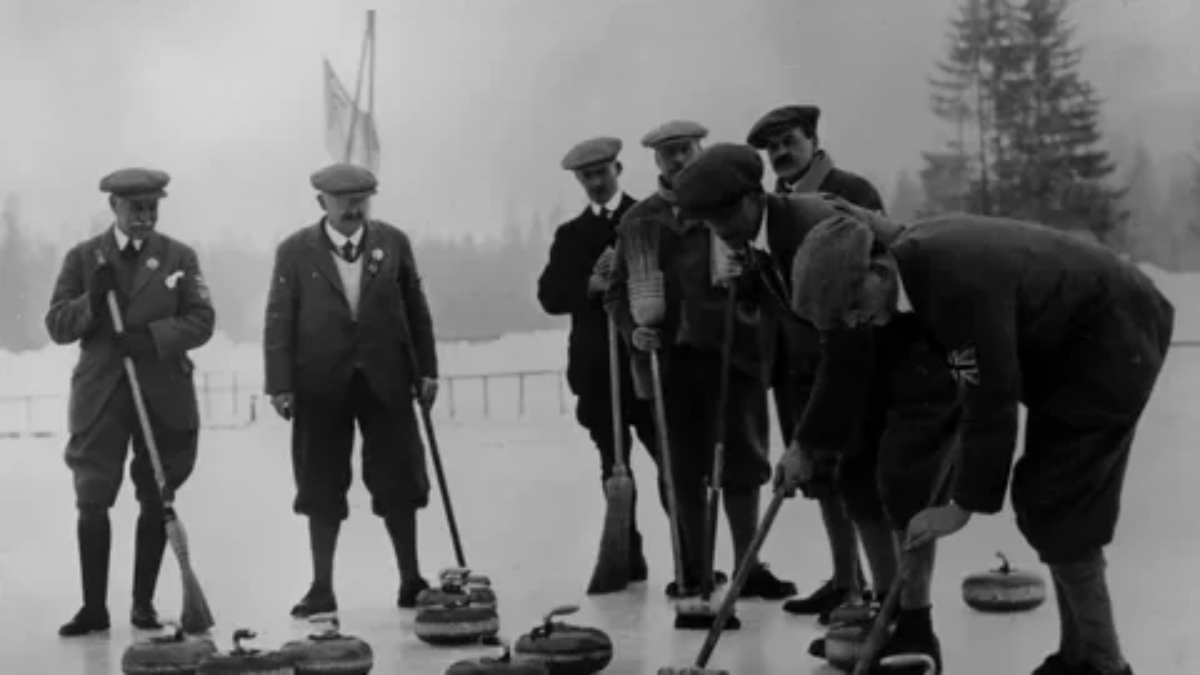
Curling is a fascinating winter sport in which players slide heavy granite stones across a sheet of ice toward a circular target called the house. Often compared to a combination of bowling and chess, the sport requires accuracy, teamwork, strategy, and careful control of every movement. Although curling is now played internationally and is an established Winter Olympic sport, its origins go back several centuries.
So, who invented curling? The sport does not have one officially recognized inventor. Instead, curling developed gradually in Scotland during the 16th century, where people began sliding stones across frozen ponds and lochs during winter. Over time, these informal activities developed into an organized sport with rules, clubs, competitions, and international governing organizations.
Understanding who invented curling means exploring its Scottish beginnings, the earliest historical evidence, how the rules developed, and how the game eventually spread around the world.
Who Invented Curling?
There is no single person credited with inventing curling. Historical evidence suggests that the game originated in Scotland around the early to mid-1500s.
The earliest known written reference to curling dates to 1541. It appears in records associated with Paisley Abbey in Scotland, where two monks were involved in a dispute concerning a curling stone on ice. This historical reference provides important evidence that people were already playing a recognizable form of the game during the 16th century.
However, the actual activity may have existed before this written record. People living in Scotland’s colder regions had access to frozen ponds and lakes during winter, creating natural places for recreational stone-sliding activities.
Rather than being created by a professional athlete or a particular inventor, curling appears to have emerged as a traditional winter pastime among ordinary communities.
Where Did Curling Originate?
Curling originated in Scotland, a country in the northern part of the United Kingdom. Its early development was closely connected to Scottish winter weather, frozen waterways, and community recreation.
During colder months, ponds, rivers, and lochs could freeze sufficiently for people to walk and play on their surfaces. Residents began sliding stones across the ice, attempting to reach particular positions or targets.
These early activities were considerably different from modern curling. Players did not necessarily have standardized equipment, carefully prepared ice, or internationally accepted rules. Instead, they used naturally available stones and adapted their games to local conditions.
Scotland’s climate and community traditions helped the activity survive and develop. As more people became interested, curling gradually moved beyond informal recreation and became an organized competitive sport.
The sport eventually became particularly popular in Scottish towns and villages, where local groups developed their own playing traditions.
The Earliest Historical Evidence of Curling
One of the most interesting parts of curling history is that evidence of the sport comes from both written records and historical artwork.
The earliest known written reference is from 1541, but another important piece of evidence comes from a painting created in 1565.
| Historical evidence | Date | Importance |
|---|---|---|
| Paisley Abbey written reference | 1541 | One of the earliest documented references to curling |
| Painting by Pieter Bruegel the Elder | 1565 | Shows people participating in a stone-sliding activity on ice |
| Early Scottish curling traditions | 1500s–1600s | Helped establish the activity as a winter pastime |
| Formation of organized curling clubs | 1800s | Supported formal competition and standardized rules |
The evidence suggests that curling was not simply invented overnight. It developed as a recreational activity before gradually becoming a recognized sport.
Pieter Bruegel’s Painting and Early Curling
The famous Flemish painter Pieter Bruegel the Elder created an important winter painting in 1565 that provides insight into recreational activities on frozen surfaces during the 16th century.
His winter scenes show people enjoying outdoor activities on frozen waterways. Some historical interpretations associate the stone-sliding activities depicted in period artwork with the early traditions that eventually developed into curling.
It is important to distinguish between direct evidence and historical interpretation. Bruegel’s paintings provide valuable context about winter recreation in Europe, but they do not establish that he invented curling or that every stone-sliding activity depicted was the same as modern curling.
Together with the Scottish written records, historical artwork helps researchers understand the environment in which early curling traditions developed.
How Did Early Curling Work?
Early curling was much simpler than the modern version played in international competitions.
Players used stones found near rivers, lakes, or other natural locations. These stones were not manufactured according to standardized measurements, and their weight, shape, and surface could vary considerably.
The basic objective was to slide a stone across ice toward a chosen target or position.
Unlike modern curling, early players did not have professionally prepared ice sheets, specialized curling shoes, or modern sweeping equipment.
Some important characteristics of early curling included:
- Natural stones: Players often selected stones from their local surroundings.
- Frozen outdoor surfaces: Games took place on ponds, lakes, and other frozen areas.
- Informal rules: Different communities followed their own traditions.
- Simple objectives: Players attempted to slide stones toward a target.
- Community participation: The activity brought people together during winter.
These early practices created the foundation for the sport’s modern format.
How Did Curling Stones Develop Over Time?
The development of curling stones played an important role in transforming the activity into a competitive sport.
The earliest players used naturally shaped stones. Because these stones came from different locations, they varied in size, weight, and shape. This made the game less predictable and created differences between players’ equipment.
Over time, stones became more carefully selected and modified. Handles were introduced to make them easier to grip and release.
Eventually, specialized curling stones were manufactured to provide greater consistency. Modern curling stones are generally made from durable granite, which can withstand repeated contact with other stones and the ice.
Today, professional curling stones have carefully controlled dimensions and weight. A standard competition stone weighs approximately 19.1 kilograms (44 pounds), including its handle.
The development of standardized equipment made the game more consistent and helped establish common competition rules.
When Did Curling Become an Organized Sport?
Curling became increasingly organized during the 18th and 19th centuries.
As its popularity spread across Scotland, different communities began establishing curling clubs. These organizations provided opportunities for players to compete, develop skills, and maintain local traditions.
However, clubs often followed different rules. Differences in stone sizes, rink measurements, and playing arrangements made competitions between communities more difficult.
The growing popularity of the sport created a need for a central organization that could establish common standards.
One important development occurred in 1804, when the Duddingston Curling Society helped establish an early written set of curling rules. These rules contributed to the development of a more consistent version of the game.
The next major milestone came in 1838 with the creation of the Grand Caledonian Curling Club in Edinburgh.
This organization played a significant role in bringing Scottish curling clubs together and establishing common regulations.
The Formation of the Grand Caledonian Curling Club in 1838
On July 25, 1838, representatives of Scottish curling clubs gathered at the Waterloo Hotel in Edinburgh to establish the Grand Caledonian Curling Club.
The organization aimed to regulate curling through general rules and unite players from different regions.
Its establishment was a turning point because it provided the sport with a recognized organizational structure.
The club helped standardize important aspects of curling, including:
- Playing arrangements and rink dimensions.
- The number of players on a team.
- Competition regulations.
- General standards for curling equipment.
- Organized matches between affiliated clubs.
In 1843, Queen Victoria granted the organization permission to use the royal title. It subsequently became known as the Royal Caledonian Curling Club.
The organization became an influential institution in the international development of curling and helped promote the sport beyond Scotland. Scottish Curling+2
Why Was Queen Victoria Important in Curling History?
Queen Victoria did not invent curling, but her interest in the sport helped increase its recognition.
During a royal visit to Scone Palace in Scotland in 1842, the Earl of Mansfield arranged a demonstration of curling for Queen Victoria and Prince Albert.
Because the weather was unsuitable for outdoor play, the demonstration took place on the polished floor of the palace ballroom.
The unusual demonstration introduced the royal visitors to the traditional Scottish game.
Queen Victoria’s interest and subsequent approval of royal patronage helped give the Grand Caledonian Curling Club greater recognition.
In 1843, the organization received permission to adopt the name Royal Caledonian Curling Club.
This connection between the Scottish sport and the British monarchy became an important chapter in curling history. Scottish Curling+1
How Did Curling Spread Around the World?
Curling initially developed in Scotland, but it gradually became an international sport during the 19th century.
Scottish immigrants and settlers introduced the game to countries where winter temperatures provided suitable conditions for outdoor ice activities.
Canada became one of the most important destinations for curling. Scottish communities helped establish clubs and organize competitions, allowing the sport to develop a strong following.
The game also spread to other countries, including:
- United States: Scottish immigrants helped introduce curling to communities across northern regions.
- Sweden: The sport became established among winter sports enthusiasts.
- Switzerland: Curling developed as part of the country’s wider winter sporting culture.
- Norway: Local clubs helped establish organized competitions.
- New Zealand: Scottish settlers introduced the game to communities interested in winter recreation.
The development of curling clubs and national associations allowed the sport to expand beyond its Scottish origins.
Canada eventually became one of the leading nations in international curling, while Scotland maintained an important historical and cultural connection to the game. World Curling+1
When Did Curling Become an Olympic Sport?
Curling has an interesting Olympic history that includes an early appearance, a long absence, and a successful return.
The sport appeared at the 1924 Winter Olympic Games in Chamonix, France. Great Britain competed against Sweden and France in the men’s team competition.
For many years, the 1924 competition was incorrectly or inconsistently described as a demonstration event. However, the International Olympic Committee later recognized it as an official medal competition in 2006.
Curling also appeared as a demonstration sport at the 1932 Winter Olympics in Lake Placid.
It returned as a demonstration sport at the 1988 Calgary and 1992 Albertville Winter Games.
Finally, curling became a full medal sport again at the 1998 Winter Olympics in Nagano, Japan.
Both men’s and women’s competitions were included, helping introduce the sport to a much larger international audience. Curling at the 1924 Winter Olympics+2
Important Olympic Milestones in Curling History
| Year | Important development |
|---|---|
| 1924 | First Olympic appearance at Chamonix |
| 1932 | Demonstration competition at Lake Placid |
| 1988 | Returned as a demonstration sport at Calgary |
| 1992 | Demonstration competition at Albertville |
| 1998 | Returned as a full medal sport at Nagano |
| 2018 | Mixed doubles introduced as an Olympic medal event |
The Olympic journey helped transform curling from a traditional Scottish pastime into a globally recognized winter sport. World Curling+1
How Is Modern Curling Played?
Modern curling is played on a specially prepared rectangular sheet of ice called a curling rink.
Two teams compete to place their stones as close as possible to the center of a target area known as the house.
A traditional team consists of four players, each with a specific responsibility.
The players take turns delivering stones toward the target while teammates sweep the ice to influence the stone’s movement.
A standard four-player curling team includes:
- Lead: Delivers the first two stones for the team.
- Second: Delivers the next two stones.
- Third or vice-skip: Helps with strategy and delivers the next two stones.
- Skip: Leads the team’s strategy and delivers the final two stones.
Each team delivers eight stones during an end. A standard traditional game consists of ten ends.
The objective is to finish an end with one or more stones closer to the center of the house than the opponent’s nearest stone.
Unlike many other sports, curling combines physical control with detailed strategic planning.
What Makes Curling Different From Other Winter Sports?
Curling is different because success depends on accuracy, teamwork, and decision-making rather than speed alone.
Players must consider the position of existing stones, the condition of the ice, the weight of each delivery, and the possible responses from their opponents.
Some characteristics make curling particularly interesting.
Strategic thinking: Teams must decide whether to place protective stones, remove opponents’ stones, or aim directly for scoring positions.
Precision: Small differences in delivery speed and direction can change the outcome of a shot.
Teamwork: Players communicate continuously to coordinate deliveries and sweeping.
Sportsmanship: Curling has a strong tradition of respect for opponents, honesty, and fair play.
The combination of these qualities has helped the sport attract people with different athletic backgrounds.
What Is the Purpose of Sweeping in Curling?
Sweeping is one of the most recognizable features of curling.
Players use special brooms to sweep the ice in front of a moving stone. This action creates friction and can slightly warm the ice surface, helping reduce resistance.
As a result, sweeping can influence how far a stone travels and how much it curls.
Sweeping is not simply about cleaning the ice. It is an important tactical tool that allows teammates to influence a shot after the stone has been released.
The skip often watches the stone and communicates whether teammates should sweep harder, stop sweeping, or change their approach.
This combination of communication and physical coordination makes sweeping essential to modern curling.
Why Is Curling Sometimes Called Chess on Ice?
Curling is frequently described as chess on ice because players must think several moves ahead.
Every delivery can affect the position of multiple stones. A team may choose an aggressive shot to remove an opponent’s stone or a defensive shot to protect its own scoring opportunity.
For example, placing a stone in front of the house can make it more difficult for opponents to reach the target directly.
Teams must also consider how their opponents might respond.
This strategic element makes curling different from sports that rely primarily on physical speed or strength.
A successful team needs skilled stone delivery, accurate communication, and the ability to make smart decisions under pressure.
Who Governs Curling Today?
Modern international curling is governed by World Curling, formerly known as the World Curling Federation.
The international governing organization was established in 1966 as the International Curling Federation in Vancouver, Canada.
It works with national curling associations to support the sport’s international development and organize major competitions.
Its responsibilities include:
- Establishing international playing regulations.
- Organizing world championship competitions.
- Supporting the development of curling in different countries.
- Managing international competition standards.
- Working with the International Olympic Committee on Olympic curling.
World Curling has helped maintain consistency in international competitions while supporting the continued growth of the sport. Curling+1
Is Curling Still Popular Today?
Yes. Curling continues to attract players and spectators around the world.
Its popularity is particularly strong in countries with established winter sports traditions, including Canada, Scotland, Sweden, Switzerland, and the United States.
The Winter Olympics have played a major role in introducing curling to new audiences.
International championships, national leagues, university competitions, and local curling clubs also provide opportunities for people to participate.
Another reason for its popularity is accessibility. Although professional curling requires considerable skill and practice, beginners can learn the basic rules without needing the speed or physical contact associated with some other winter sports.
Modern indoor facilities have also made it possible to play curling more consistently without depending entirely on natural freezing temperatures.
What Is the Difference Between Early Curling and Modern Curling?
Curling has changed considerably since its beginnings in Scotland.
Early versions were informal outdoor activities, while modern curling is a carefully regulated international competition.
| Feature | Early curling | Modern curling |
|---|---|---|
| Playing location | Frozen ponds and lochs | Indoor ice rinks |
| Stones | Naturally selected stones | Standardized granite stones |
| Rules | Local traditions | International regulations |
| Equipment | Basic stones | Specialized stones, shoes, and brooms |
| Competition | Local community games | National and international tournaments |
| Ice conditions | Natural weather-dependent ice | Carefully maintained ice surfaces |
| Organization | Informal groups and local clubs | National associations and World Curling |
These changes show how a traditional winter activity developed into a sophisticated international sport while preserving its original objective of sliding stones toward a target.
Why Is the Sport Called Curling?
The name curling is connected to the movement of the stone across the ice.
When a curling stone travels, it can follow a curved path rather than moving in a perfectly straight line. This characteristic movement is known as curling.
Players use controlled rotation, delivery technique, and sweeping to influence the stone’s direction and distance.
The name reflects one of the sport’s most recognizable features: the way the stone gradually curves as it travels toward the house.
Although the equipment and playing conditions have changed over the centuries, this distinctive movement remains central to the game.
Conclusion
Curling was not invented by one specific individual. Historical evidence points to Scotland in the 16th century as the birthplace of the sport, with an early written reference dating back to 1541 at Paisley Abbey.
What began as a simple winter activity involving stones sliding across frozen ponds gradually developed into an organized competitive sport. The establishment of the Grand Caledonian Curling Club in 1838, the introduction of standardized rules, and the spread of Scottish traditions to other countries all contributed to its development.
Today, curling is an internationally recognized winter sport governed by World Curling and featured in the Winter Olympics.
Its history demonstrates how a traditional community pastime can evolve into a competitive sport enjoyed by people around the world.
Frequently Asked Questions (FAQs)
Who invented curling?
No single person is credited with inventing curling. The sport developed gradually in Scotland during the 16th century as people began sliding stones across frozen ponds and lakes.
When was curling first invented?
Curling is believed to have originated around the early to mid-1500s. Its earliest known written historical reference dates to 1541.
Where was curling invented?
Curling originated in Scotland. The country’s cold winters and frozen waterways provided suitable conditions for the early form of the game.
What is the oldest evidence of curling?
One of the earliest known written references to curling dates to 1541 and is associated with Paisley Abbey in Scotland. It describes a dispute involving curling stones on ice.
Who established the first major curling organization?
The Grand Caledonian Curling Club was established in Edinburgh on July 25, 1838. It later became known as the Royal Caledonian Curling Club.
When did curling become an Olympic sport?
Curling appeared at the 1924 Winter Olympics in Chamonix, France. It returned as a full medal sport at the 1998 Winter Olympics in Nagano, Japan.
Why is curling called chess on ice?
Curling is called chess on ice because it requires strategic thinking, planning, and careful decision-making. Players must consider how each stone will affect the position of other stones and their opponents’ next moves.





[…] the exact date when kalapari was first prepared is not firmly documented. It would therefore be inaccurate to assign a specific […]