
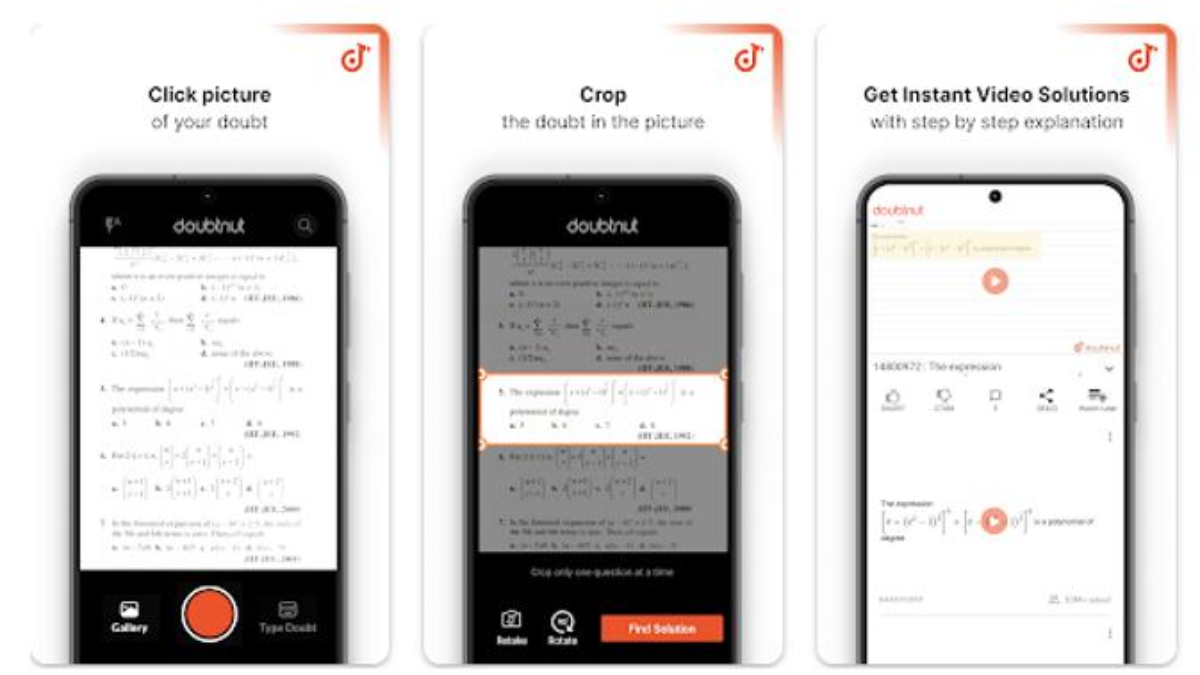
Doubtnut is an Indian educational technology (EdTech) company that became popular for helping students solve academic problems through photographs, videos, and digital learning resources. The company attracted significant attention from investors because of its technology-driven approach to education, particularly among students preparing for school examinations and competitive entrance tests.
The story of Doubtnut valuation is particularly interesting because the company experienced a substantial change in its estimated worth. During its growth period, Doubtnut attracted investment at a valuation exceeding $100 million. It also received acquisition interest from Byju’s, with reports suggesting a potential deal worth as much as $150 million. However, in December 2023, Allen Career Institute acquired the company in a transaction reportedly valuing it at approximately $10 million.
This change highlights how quickly startup valuations can move when market conditions, revenue generation, competition, and business models change. Understanding Doubtnut’s funding history, investor expectations, acquisition, and business performance provides a useful example of the opportunities and risks associated with the Indian EdTech industry.
What Is Doubtnut?
Doubtnut is an Indian EdTech platform designed to help students understand academic subjects and solve difficult questions. Its original concept focused on making educational assistance accessible through technology rather than requiring students to depend entirely on traditional classroom teaching or private tutors.
The platform became particularly known for its image-based doubt-solving feature. Students could take a photograph of a mathematical or scientific question and upload it through the application. The platform would then provide relevant explanations, educational videos, or step-by-step solutions.
Doubtnut primarily served students studying in school grades and those preparing for competitive examinations, including the Joint Entrance Examination (JEE) and the National Eligibility cum Entrance Test (NEET).
Its educational resources covered subjects such as:
- Mathematics
- Physics
- Chemistry
- Biology
- School-level science
- Competitive examination preparation
One important part of Doubtnut’s strategy was providing educational content in multiple Indian languages. This approach helped address the needs of students who preferred learning in their regional languages rather than relying exclusively on English-language resources.
Doubtnut Valuation: How Much Is the Company Worth?
The most important figure associated with Doubtnut’s valuation is approximately $10 million, which was the reported valuation of its acquisition by Allen Career Institute in December 2023.
This figure is substantially lower than the company’s earlier reported valuation of approximately $121 million during its February 2021 Series B funding round.
However, it is important to understand that a reported acquisition valuation and a current independent company valuation are not necessarily the same thing. Doubtnut is a privately held business, and there is no publicly traded share price that investors can use to calculate its current market capitalization.
The $10 million figure should therefore be understood as a reported historical transaction valuation, not a verified real-time market value for November 2026.
| Valuation milestone | Reported valuation |
|---|---|
| Byju’s acquisition discussions in 2020 | Up to approximately $150 million |
| February 2021 Series B funding | Approximately $100–125 million |
| February 2021 valuation estimate reported by Entrackr | Approximately $121 million |
| December 2023 Allen acquisition | Approximately $10 million |
These figures come from different transactions and reporting sources. They should not be treated as identical valuation measurements.
The December 2023 acquisition figure is especially important because it provides a later transaction-based reference point for understanding the company’s financial journey. TechCrunch+3
Doubtnut’s Early Growth and Business Model
Doubtnut entered the Indian education market with a relatively simple but practical idea: students should be able to receive explanations for difficult questions without spending significant amounts of money on individual tutoring.
Traditional education often requires students to ask teachers, attend coaching classes, or search through textbooks to understand complicated problems. Doubtnut attempted to make this process easier through a mobile application and online educational resources.
How Doubtnut Made Money
The company developed a business model combining free educational resources with paid learning services.
Its potential revenue streams included:
- Paid courses: Structured educational courses for school students and competitive examination candidates.
- Subscription services: Access to additional learning resources and educational content.
- Live classes: Online teaching sessions for students who wanted more direct instruction.
- Video lectures: Recorded lessons explaining academic subjects.
- Test preparation: Practice materials, examination preparation, and assessment resources.
The platform’s free doubt-solving feature helped attract students, while paid courses and subscriptions offered opportunities to convert some of those users into paying customers.
However, attracting a large audience does not automatically create a profitable business. A company must convert sufficient user engagement into sustainable revenue while controlling technology, marketing, content production, and employee expenses.
This distinction became important when investors began evaluating Doubtnut’s long-term financial performance.
Doubtnut Funding History and Major Investors
Doubtnut attracted investment from several well-known venture capital firms and institutional investors. These investors supported the company’s ambition to expand its technology, reach more students, and develop additional educational products.
Its funding history is important because investment rounds provide useful information about how investors viewed the company’s growth prospects.
According to company database information compiled by Inc42, Doubtnut raised more than $52.34 million across its recorded funding history. Inc42+1
Major Funding Rounds
| Funding period | Investment | Important details |
|---|---|---|
| April 2017 | $100,000 | Early angel investment |
| March 2018 | Approximately $540,000 | Seed funding |
| April 2019 | $3.3 million | Investment involving Sequoia and other backers |
| February 2020 | $15 million | Series A funding |
| February 2021 | $31 million | Series B funding |
| April 2023 | $2.5 million | Convertible financing reported by Entrackr |
The figures are reported across different funding databases and news reports. Small differences may occur because of currency conversions, reporting dates, and the classification of financing rounds. Dealroom.co+3
Who Invested in Doubtnut?
Several investors participated in Doubtnut’s development.
Peak XV Partners: Previously known as Sequoia Capital India, Peak XV was among the important investors supporting the company’s expansion.
Omidyar Network: The investment organization participated in earlier funding rounds and supported the startup’s growth.
WaterBridge Ventures: This venture capital firm participated in multiple investment rounds.
Tencent: The Chinese technology company participated in Doubtnut’s Series A financing.
Lupa Systems: Founded by James Murdoch, Lupa Systems participated in the company’s Series B financing.
SIG Global: Susquehanna International Group was among the investors leading the February 2021 funding round.
These investments demonstrated that Doubtnut had attracted considerable institutional interest during the expansion period of India’s online education industry.
Why Was Doubtnut Valued at More Than $100 Million?
Doubtnut’s valuation increased because investors saw potential in its technology, educational audience, and opportunity to serve a large market.
India has millions of school students, many of whom need additional assistance with mathematics, science, and competitive examination preparation. Digital learning platforms offered an opportunity to reach these students without depending entirely on physical classrooms.
Several factors contributed to Doubtnut’s earlier valuation.
Technology and Artificial Intelligence
Doubtnut used image recognition and machine learning technology to help identify questions uploaded by students.
Instead of manually typing a complicated mathematical problem, a student could photograph it and submit the image.
This approach made the platform more convenient, especially for questions containing mathematical symbols, equations, and scientific diagrams.
Its technology-focused approach helped differentiate the platform from traditional educational websites.
Large Student Audience
Doubtnut attracted attention because of its ability to reach students through applications, websites, and video platforms.
At the time of its acquisition, Allen stated that the platform reached approximately 32 million students across its digital applications, websites, and YouTube presence.
This audience represented a valuable opportunity for an established education provider looking to expand its digital services. The Economic Times+1
Regional Language Education
India has a diverse linguistic population. Students do not all study comfortably in English, particularly when dealing with complicated academic subjects.
Doubtnut’s multilingual educational resources helped it address this demand.
Its approach offered an opportunity to make digital education more accessible to students outside major metropolitan areas.
Competitive Examination Market
Students preparing for examinations such as JEE and NEET frequently need additional explanations and practice questions.
This created an attractive market for platforms offering video lessons, doubt-solving services, and structured courses.
Doubtnut’s focus on these educational needs made it relevant to both individual students and established coaching institutions.
Byju’s $150 Million Acquisition Interest
One of the most significant moments in Doubtnut’s valuation history came in 2020, when BYJU’S reportedly explored acquiring the startup.
According to TechCrunch, the proposed acquisition could have valued Doubtnut at approximately $150 million.
However, the deal did not proceed.
Earlier reporting by Entrackr described a disagreement over the proposed valuation. Byju’s reportedly initially considered a deal in the range of $130 million before reducing its offer to approximately $80–90 million following due diligence.
Doubtnut reportedly did not accept the revised terms.
This was an important development because it demonstrated the difference between an acquisition proposal and a completed transaction.
An acquisition offer does not establish a company’s final market value. The buyer and seller must agree on the financial terms, conduct due diligence, and complete the transaction.
In Doubtnut’s case, the proposed Byju’s acquisition remained unsuccessful. Entrackr+1
Doubtnut’s $31 Million Series B Funding Round
In February 2021, Doubtnut raised approximately $31 million in Series B funding.
The round was led by SIG and Lupa Systems, with participation from existing investors, including Sequoia Capital India, Omidyar Network India, and WaterBridge Ventures.
The Economic Times reported that the company was valued at approximately $100 million to $125 million during this financing round.
Entrackr separately estimated its post-money valuation at approximately $121 million.
This funding provided additional financial resources for expanding the platform’s educational offerings, supporting technology development, introducing additional languages, and launching paid courses.
The round also represented a significant milestone because it showed that institutional investors continued to see potential in Doubtnut’s business model.
However, raising substantial capital also increases expectations. Investors generally want startups to demonstrate that their user growth can eventually translate into sustainable revenue and a stronger financial position. The Economic Times+2
Why Did Doubtnut’s Valuation Decline?
Doubtnut’s later acquisition valuation was significantly lower than its earlier reported funding valuation.
The difference between approximately $121 million in 2021 and $10 million in December 2023 illustrates how startup valuations can change when business performance does not meet investor expectations.
Several issues were reported during the company’s later growth period.
Difficulty Monetizing Its Audience
One challenge was converting a large student audience into paying customers.
Free educational content can attract considerable traffic, but generating revenue requires a successful monetization strategy.
Students may use free videos and doubt-solving services without purchasing subscriptions or courses.
This can create a gap between audience size and financial performance.
Entrackr reported in November 2023 that Doubtnut had struggled to establish a sufficiently effective business model and had explored acquisition opportunities. Entrackr
High Operating Expenses
Operating an educational technology platform requires significant resources.
These can include:
- Technology development and maintenance.
- Educational video production.
- Teacher and content creator payments.
- Marketing and customer acquisition.
- Employee salaries.
- Platform infrastructure.
Entrackr reported that Doubtnut spent approximately ₹194 crore during FY22 while earning around ₹10 crore in revenue.
Its report also cited revenue of approximately ₹26.6 crore for FY23.
These figures illustrate the financial pressure that can develop when operating expenses grow faster than revenue. Entrackr
Changing EdTech Market Conditions
The Indian EdTech industry experienced significant changes after the rapid growth in online education during the COVID-19 pandemic.
As students returned to physical classrooms and coaching centres, online education companies faced changing customer behaviour.
Companies also had to reconsider marketing expenses, subscription pricing, and customer acquisition strategies.
For startups that had expanded rapidly, adjusting to these market conditions could be difficult.
Limited Access to New Equity Funding
Doubtnut’s last major equity financing round was in February 2021.
Although it reportedly raised another $2.5 million through convertible financing in April 2023, it did not secure another large equity round comparable to its Series B investment.
When investors become more cautious, startups may have fewer opportunities to raise capital at previously established valuations.
This can increase pressure to explore strategic partnerships, restructuring, or acquisitions. Entrackr+1
Allen Career Institute Acquires Doubtnut for $10 Million
In December 2023, Allen Career Institute acquired Doubtnut.
The transaction marked a major change in the company’s ownership and financial history.
According to TechCrunch, the acquisition valued Doubtnut at approximately $10 million. The Economic Times also reported the same estimated valuation, citing sources familiar with the transaction.
However, Allen officially announced the acquisition without publicly disclosing its financial terms.
This distinction is important: the $10 million figure was reported by news organizations rather than confirmed as an official disclosed purchase price by Allen. TechCrunch+1
Why Did Allen Acquire Doubtnut?
Allen had already established a strong position in India’s competitive examination preparation market.
The institute wanted to strengthen its digital education capabilities and expand the technology supporting its teaching services.
Doubtnut offered several advantages:
- An established digital learning platform.
- A large student audience.
- Existing educational content.
- Image-based doubt-solving technology.
- Experience in online learning.
- A digital presence across applications, websites, and YouTube.
By combining these resources with Allen’s academic expertise, the institute could potentially provide a more integrated learning experience.
What Happened to Doubtnut After the Acquisition?
The acquisition allowed Doubtnut’s technology and doubt-solving platform to become part of Allen’s broader educational strategy.
Allen stated that Doubtnut’s team would continue developing the problem-resolution platform for students.
The institute also planned to make its academic curriculum and educational offerings available to Doubtnut’s student base.
This arrangement demonstrated how an established education provider could use an acquired technology platform to strengthen its digital services. The Economic Times+1
Doubtnut Valuation Before and After the Acquisition
The difference between Doubtnut’s earlier funding valuation and its acquisition valuation is one of the most interesting aspects of its business history.
The following table summarizes the major valuation milestones.
| Period | Valuation | Event |
|---|---|---|
| 2020 | Up to $150 million | Reported Byju’s acquisition interest |
| February 2021 | $100–125 million | Series B valuation reported by ET |
| February 2021 | Approximately $121 million | Entrackr post-money estimate |
| January 2022 | $154 million | Valuation reported by ET citing Tracxn data |
| December 2023 | Approximately $10 million | Reported Allen acquisition valuation |
One detail deserves attention: the Economic Times reported that Doubtnut’s last valuation before its acquisition was approximately $154 million in January 2022, based on Tracxn data.
This is different from the approximately $121 million estimate reported for the February 2021 Series B round.
The figures relate to different reporting periods and valuation records, so they should not be combined into a single funding-round figure. The Economic Times+2
Doubtnut Revenue and Financial Performance
Revenue is one of the most important factors investors consider when evaluating an EdTech company.
A platform can attract millions of students, but its long-term business value depends on its ability to generate revenue and manage expenses.
According to Entrackr’s reporting, Doubtnut recorded approximately ₹26.6 crore in revenue during FY23.
More recent company information compiled by Inc42 reports the following figures:
| Financial year | Reported revenue |
|---|---|
| FY23 | ₹26.6 crore |
| FY24 | ₹80.5 crore |
| FY25 | ₹16.3 lakh |
The FY23 figure comes from Entrackr, while FY24 and FY25 figures come from Inc42’s company database. Entrackr+1
The reported FY25 revenue represents a substantial decline from the previous financial year. However, readers should interpret these figures carefully because Doubtnut was acquired by Allen in December 2023. Changes in company structure, financial reporting, and the attribution of revenue can affect comparisons between financial years.
These figures should not automatically be interpreted as a complete measure of the educational platform’s performance under its new ownership.
Why Revenue Matters More Than User Numbers
A large student audience can make an educational platform attractive to potential buyers, but it does not necessarily guarantee profitability.
Investors typically examine several financial indicators:
- Annual revenue growth.
- Subscription conversion rates.
- Customer acquisition costs.
- Operating expenses.
- Gross margins.
- Customer retention.
- Cash flow.
- Profitability.
For Doubtnut, the central business challenge was not simply attracting students. It was creating a financially sustainable business around its educational technology and audience.
What Made Doubtnut Attractive to Investors?
Despite its valuation decline, Doubtnut demonstrated several characteristics that made it interesting to investors and potential strategic buyers.
An Established Educational Platform
Building an educational application from scratch requires time, technical expertise, and investment.
Doubtnut already had a functioning platform with educational resources and doubt-solving capabilities.
This gave Allen an opportunity to incorporate existing technology into its digital education operations.
Strong Brand Recognition
Doubtnut became recognizable among students looking for solutions to mathematics and science questions.
Its educational content and online presence helped it build visibility in a competitive market.
Technology-Based Learning
Its image-recognition approach provided an alternative to conventional question-and-answer platforms.
Students could submit photographs instead of typing complicated questions.
This functionality helped simplify the process of accessing educational explanations.
Access to Digital Students
The reported reach of 32 million students was another important advantage.
For a traditional coaching institute expanding its online presence, an existing digital audience could provide opportunities to introduce additional educational products and services.
Doubtnut vs. Traditional EdTech Business Models
Doubtnut’s journey also demonstrates the differences between technology-focused educational platforms and traditional coaching institutions.
| Business factor | Doubtnut’s original approach | Traditional coaching approach |
|---|---|---|
| Main service | Online doubt-solving | Classroom teaching |
| Student access | Mobile applications and websites | Physical centres and online classes |
| Learning resources | Videos and digital explanations | Teachers, books, and lectures |
| Question solving | Image-based technology | Teacher-led assistance |
| Geographic reach | Digital distribution | Centre-based and online distribution |
| Revenue opportunities | Courses and subscriptions | Tuition fees and educational programmes |
Neither model is automatically better.
Digital platforms can reach students across geographical boundaries, while established coaching institutes may benefit from stronger teaching networks, structured programmes, and established customer relationships.
Allen’s acquisition of Doubtnut brought these two approaches closer together.
What Does Doubtnut’s Valuation Tell Us About India’s EdTech Industry?
Doubtnut’s financial journey provides an important example of the risks associated with rapid startup expansion.
During periods of strong investor confidence, technology companies may receive high valuations based on expected future growth.
However, those valuations can change when revenue growth slows, operating expenses increase, or market conditions become less favourable.
Growth Does Not Always Mean Profitability
A startup may increase its user numbers without generating enough revenue to cover its operating costs.
This is especially important for companies that provide free educational services.
Investor Confidence Can Change
Venture capital investors often support startups based on their potential to capture large markets.
If a company struggles to achieve its expected growth, investors may reconsider its valuation.
Strategic Acquisitions Can Create New Opportunities
Not every struggling startup disappears.
Some companies possess valuable technology, educational content, or customer relationships that another organization can use more effectively.
Doubtnut’s acquisition by Allen demonstrates this possibility.
Business Sustainability Is Essential
Long-term success requires more than a popular application.
Companies must establish effective revenue models, manage expenses, retain customers, and continuously improve their services.
These lessons apply to startups across the Indian technology and education sectors.
Is Doubtnut Still Operating After Its Acquisition?
Doubtnut’s ownership changed when Allen Career Institute acquired the platform in December 2023.
The acquisition announcement indicated that Doubtnut’s problem-resolution platform would continue to be developed for students.
This means the acquisition should not simply be interpreted as the disappearance of the original educational product. Instead, its technology and platform became part of a larger education business.
However, the company’s historical independent status and its present position under Allen are different matters.
Anyone researching Doubtnut’s current operations should distinguish between:
- The original Doubtnut startup.
- Its acquisition by Allen.
- The continued development of its educational platform.
- The financial reporting of its associated corporate entity.
For the latest information about available educational services, readers should consult the official Doubtnut website and Allen Career Institute website.
Can Doubtnut Return to Its Earlier Valuation?
Whether Doubtnut can regain its previous valuation depends on several factors.
Its acquisition by Allen gives the platform access to an established educational organization, but this does not guarantee that its valuation will increase.
Several developments could influence its future business prospects.
Successful integration: Combining Doubtnut’s technology with Allen’s educational programmes could create additional value if the integration works effectively.
Revenue growth: Increasing paid subscriptions, digital course sales, and other revenue opportunities could strengthen its financial position.
Student retention: Keeping students engaged and encouraging repeat usage would be important for building a sustainable digital platform.
Technology improvements: Improving doubt-solving technology and educational recommendations could help differentiate the platform.
Operational efficiency: Managing technology, staffing, and marketing costs would also influence long-term financial performance.
There is currently no reliable basis for claiming that Doubtnut has returned to its earlier $100 million-plus valuation.
The company’s future value would require updated financial information and a credible valuation assessment.
Conclusion
The story of Doubtnut valuation demonstrates how dramatically startup valuations can change over time.
The company attracted significant investor interest, raised more than $52 million in reported funding, and reached a valuation exceeding $100 million during its growth period. It also attracted acquisition interest from Byju’s, with reports suggesting a potential valuation of up to $150 million.
However, business challenges, monetization difficulties, operating expenses, and changing market conditions affected its financial prospects.
In December 2023, Allen Career Institute acquired Doubtnut in a transaction reportedly valuing the company at approximately $10 million.
The most important takeaway is that a startup’s valuation depends on more than its popularity or technology. Revenue generation, profitability, sustainable growth, and business execution play essential roles in determining its long-term value.
Doubtnut’s acquisition also shows how an established educational institution can find strategic value in a technology platform even when its independent startup valuation has declined.
For readers researching Doubtnut’s financial history, the approximately $10 million acquisition valuation remains the most important reported transaction reference, rather than a confirmed current market valuation.
Frequently Asked Questions
What is Doubtnut’s valuation?
Doubtnut was reportedly valued at approximately $10 million when Allen Career Institute acquired it in December 2023. This is a historical transaction estimate, not a confirmed current valuation.
What was Doubtnut’s highest reported valuation?
Reports associated with the company’s acquisition discussions with Byju’s in 2020 suggested a potential valuation of up to $150 million. This was a proposed acquisition valuation, not a completed transaction.
Who acquired Doubtnut?
Allen Career Institute acquired Doubtnut in December 2023. The acquisition was intended to strengthen Allen’s technology-led educational services.
How much funding did Doubtnut raise?
Inc42 and other company databases report that Doubtnut raised more than $52 million during its funding history. Its investors included Peak XV Partners, Omidyar Network, WaterBridge Ventures, Tencent, SIG Global, and Lupa Systems.
Why did Doubtnut’s valuation decline?
Reported challenges included difficulty monetizing its large student audience, substantial operating expenses, limited access to further equity funding, and changing conditions in the Indian EdTech market.
Did Byju’s try to acquire Doubtnut?
Yes. Byju’s reportedly explored acquiring Doubtnut in 2020, with a potential valuation of up to $150 million. However, negotiations failed because of disagreements over the proposed acquisition terms and valuation.
Is Doubtnut still an independent company?
No. Allen Career Institute acquired the business in December 2023. Its educational platform became part of Allen’s broader digital education strategy.





[…] available information about Brad Lightcap‘s childhood, parents, and private family life is limited. Rather than relying on unverified […]